
Reporting a hit-and-run in San Bernardino
Report a hit-and-run to law enforcement as soon as you can, even if you feel fine. Inside the city, call the San Bernardino Police Department. On a freeway, the California Highway Patrol takes the report. In a city that contracts with the Sheriff's Department for police services, a deputy handles it.
Read moreShow less
Leaving the scene of a crash that injures someone is a crime in California. Investigators may identify the driver through witness accounts, paint transfer, parts left behind or nearby cameras.
If the driver is never found, your own uninsured motorist coverage may pay for your injuries. That coverage has its own reporting rules, so tell your insurer promptly.
How LA Century Law helps after a hit-and-run
We help people hurt by hit-and-run drivers recover compensation, even when the driver is never found. Most of these cases run on 2 tracks at once: the search for the driver and a claim on your own insurance. We handle both while you focus on your recovery.
Once you open a claim, your own insurer starts to act like the other side. We deal with the adjuster, gather the proof your policy requires and put a fair value on your injuries. If the insurer will not pay what the claim is worth, our litigation department takes it to arbitration or court.
- The police report and claim numbers
- Written notice to your insurer
- The search for the driver
- Medical bills and records
- Settlement talks or arbitration
What to do after a hit-and-run accident
Get medical care
Get medical care right away, even if you feel fine. Your medical records also document your injuries for the claim.
Report the crash to police
Report it within 24 hours, even if officers did not come to the scene. Ask for the report number.
Write down what you saw
Note the car's color, make, model, direction of travel and any plate characters. Do it while your memory is fresh.
Photograph everything
Take photos of the scene, the damage, any debris and your injuries. Keep any broken parts the other car left behind.
Look for cameras and witnesses
Note nearby businesses, doorbell cameras and anyone who stopped to help. Video can be erased within days.
Notify your insurer
Tell your insurer about the crash promptly, as your policy requires. Talk to us before you give a recorded statement.
Call LA Century Law
We can take over the insurer calls, the search for the driver and the deadlines. The consultation is free.
How long you have
California sets firm deadlines for these claims. Enter the date it happened to see yours.
- The day it happened
- Police report for UM coverageWithin 24 hours of the crash
- Deadline to file a lawsuit2 years in most cases
These are the general California deadlines. Some claims have different ones, for example for children or injuries found later. A lawyer can confirm yours in a free consultation.
What counts as a hit-and-run in California
A hit-and-run happens when a driver involved in a crash leaves without stopping to identify themselves or help. It can happen to drivers, passengers, pedestrians and cyclists.
- A rear-end crash at a light where the other car speeds off
- A pedestrian struck in a crosswalk by a driver who keeps going
- A cyclist clipped by a passing car
- A freeway sideswipe where the other driver never stops
- A parking lot crash where the driver leaves before you see a plate
Leaving the scene is a crime
Under Vehicle Code section 20001, a driver involved in a crash that injures someone must stop, share identifying information and help the injured person. Leaving instead is a crime. Prosecutors handle that case, separately from your claim for compensation.
The criminal case can still help you. Police reports, witness statements and evidence gathered for the prosecution often support the civil claim. A criminal court can also order the driver to repay some of your financial losses, which is called restitution.
You do not need a conviction to recover. Your claim can move forward even if the driver is never charged.
Your own uninsured motorist coverage usually pays
When the driver is never identified, uninsured motorist (UM) coverage on your own auto policy is usually the main source of payment. California treats an unknown hit-and-run driver much like a driver with no insurance. Your UM coverage can pay for your financial losses and your pain, up to your policy limit.
California insurers must offer UM coverage, but a policyholder can reject it in writing. Check your declarations page, or send it to us and we will read it for you.
Coverage that follows you
UM coverage often protects you and relatives who live with you, even if you were walking, biking or riding in someone else's car. The exact terms depend on the policy. We read the policy language to find every coverage that applies.
Other coverage that can help
Other sources can fill gaps while the UM claim is open.
- Medical payments coverage on your auto policy
- Your health insurance
- Collision coverage for damage to your car
- The policy on the car you were riding in
- The driver's liability insurance, if the driver is found later
What a hit-and-run claim can cover
A hit-and-run claim can cover the same losses as any claim against a careless driver. What you recover depends on your injuries, your records and the coverage available.
- Medical bills, including future treatment
- Lost wages and lost earning ability
- Pain, emotional distress and loss of enjoyment of life
- Scarring or lasting physical limits
- Repair or replacement of your car or bike
How policy limits shape the claim
When the driver is never found, your UM limit usually caps what your insurer pays. If the driver is identified later, the driver's insurance may add another source. We look for every policy that could apply before we put a number on your claim.
When a hit-and-run is fatal
When a hit-and-run takes a life, close family members such as a spouse or children may bring a wrongful death claim. The search for the driver works the same way. So does the review of every policy that could pay the family.
Deadlines and rules that protect your claim
A hit-and-run UM claim comes with conditions. Missing them can put your coverage at risk.
Read moreShow less
California's UM law expects a hit-and-run to be reported to the police within 24 hours. Your insurer also needs written notice of the claim, often with a sworn statement, within the time the law and your policy allow.
For an unknown driver, California generally requires physical contact. The hit-and-run car must have touched you or the vehicle you were in. A driver who forces you off the road without contact may not trigger this coverage.
UM claims also have their own clock. Within 2 years of the crash, you generally must settle the claim, formally demand arbitration or file suit against the driver. A lawsuit against an identified driver also has a 2-year deadline in most cases.
California's comparative fault rule applies too. If the insurer argues you share some blame, your recovery is reduced by your share, not barred.
How we find the driver and build your claim
We start looking for the driver right away, because the evidence that identifies a car fades fast. Police investigate hit-and-runs, but we run our own search alongside theirs.
- Full or partial license plates
- Paint transfer on your car or bike
- Broken parts left at the scene
- Traffic, business and doorbell camera video
- Dashcam footage from other drivers
- Witness names and statements
Video and witnesses disappear
Many businesses record over security footage within days or weeks. Witnesses move, change numbers or forget details. We send preservation requests early. We also canvass the area for cameras and people who saw the crash.
If the driver is found
If police identify the driver, we open a claim against the driver's liability insurance. If that coverage is too low, your underinsured motorist coverage may cover the gap.
Proving the value of your injuries
Your medical records, bills and work records show what the crash cost you. We collect them, track your treatment and present the full picture to the insurer. If it will not pay fairly, we take the claim to arbitration.
Talk to a hit-and-run lawyer
Call us at (213) 205-0657 as soon as you can after a hit-and-run. In a free consultation, we review your policy, your injuries and the steps you have taken so far. We answer 24/7, our team speaks Spanish, and you pay nothing unless we win.
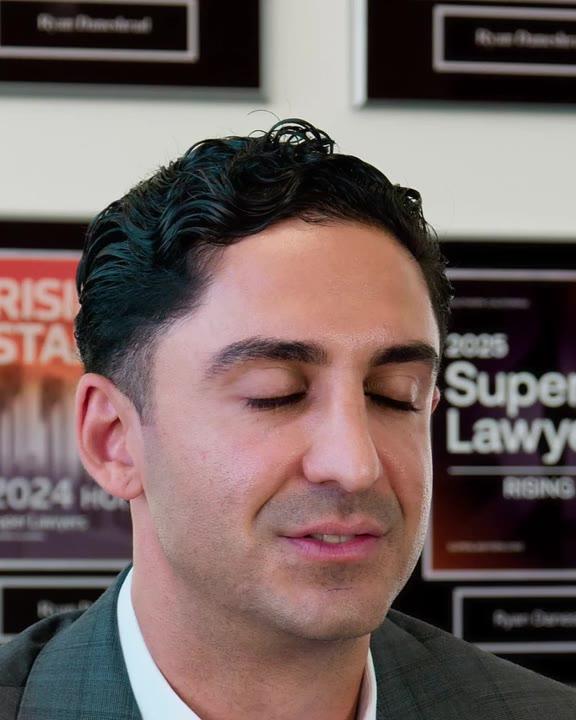
Straight answers from Ryan J. Daneshrad
Short videos from our founding attorney on the questions people ask about hit-and-run accident claims.

Frequently asked questions
Can business security cameras help find a hit-and-run driver in San Bernardino?
Yes, cameras at nearby businesses can help when they face the street or a parking lot. Footage may be erased after a short time, so ask for it quickly or let us request it.
I don't have uninsured motorist coverage. Can I still recover after a hit-and-run in San Bernardino?
You may, if police identify the driver or other coverage applies. Once the driver is found, you can pursue that driver's insurance. A household member's policy, or the policy on the car you were riding in, may also cover you.
Can I get compensation if the hit-and-run driver is never found?
Yes, in many cases. If you carry uninsured motorist coverage, your own insurer can pay for your injuries when the driver is never identified. Medical payments coverage or health insurance may also help with bills.
What if the hit-and-run car never touched me?
An uninsured motorist claim gets harder without contact. California generally requires physical contact between an unidentified car and you or your vehicle for this coverage to apply. If the driver is identified, you can still bring a claim against that driver.
How soon do I need to report a hit-and-run to the police?
Report it right away, and within 24 hours, to protect an uninsured motorist claim. Your policy also requires timely written notice to your insurer. A late report gives the insurer a reason to dispute coverage.
Does my car insurance cover me if I was hit while walking or biking?
Often, yes. Uninsured motorist coverage usually protects you as a pedestrian or cyclist, not only while driving. It may also cover relatives who live with you, depending on the policy.
What happens if police find the driver later?
Your claim can then go against the driver's liability insurance. If the driver has no insurance or too little, your uninsured or underinsured motorist coverage can still apply. The criminal court may also order restitution for some of your financial losses.


